The Lyceum: Sunday Edition — Aug 09, 2026

Photo: lyceumnews.com
Week of August 9, 2026
The Big Picture
Physical limits defined the week. Diplomats could sketch routes through the Strait of Hormuz, but they could not make ships safe; Ukraine could count incoming weapons, but not manufacture interceptors fast enough; technology companies could promise artificial intelligence everywhere, but first they needed power plants, permits and water.
The United States delivered a second warning: employers cut jobs in July even as expensive energy kept inflation pressure alive. The Federal Reserve may soon have to choose which part of its mandate gets hurt.
This Week's Stories
Hormuz Diplomacy Has Reached the Part a Map Cannot Solve
Your fuel bill is being negotiated one shipping lane at a time.
Iranian Foreign Minister Abbas Araghchi said Sunday that talks with Oman over routes through the Strait of Hormuz were in their final stages. But according to the Associated Press, Iran has warned that a routing agreement would not, by itself, reopen the strait: Tehran is also seeking an end to the war, sanctions relief, the release of frozen assets and the withdrawal of American forces.
That distinction is decisive. A maritime plan could help individual ships navigate the strait, but it cannot guarantee crew safety, affordable insurance or compliance from Iran’s regional allies. The Houthis’ claimed attack on a Saudi Aramco facility underscored how many actors can spoil a bilateral deal.
President Donald Trump’s prediction that the war could end within “two or three weeks” was reported by CBS News in early April, not this week. Instead, the conflict has lasted long enough to reshape gasoline prices and American military commitments. The House passed a $1.15 trillion military bill expanding cooperation with Israel on July 22, Al Jazeera reported; no Senate floor action appeared in this week’s research.
Commercial traffic is the test. If ships return and insurance costs fall before a comprehensive peace agreement, the parties may have found a workable truce. If traffic remains scarce, the route plan is diplomacy drawn neatly on water.
America Lost 23,000 Jobs—and Unemployment Still Fell
The labor market shrank in July, even as unemployment fell.
The Bureau of Labor Statistics reported Friday that nonfarm payrolls fell by 23,000 in July. Local-government education and retail employment declined, while health care added jobs. The unemployment rate nevertheless slipped to 4.1% on the session, partly because fewer people were participating in the labor force.
Revisions made the report harder to dismiss as monthly noise. The Bureau of Labor Statistics lowered its combined estimates for May and June by 103,000 jobs. Earlier in the week, stronger manufacturing activity had suggested that parts of the economy were accelerating. Employers were not accelerating with them.
Ordinarily, job losses would make lower interest rates more likely. But the Iran war is still raising energy and transport costs, leaving the Federal Reserve with a punishing combination: weaker employment and inflation that may refuse to cool.
Wednesday’s consumer-price report is the next dividing line. Softer inflation would give the Federal Reserve room to support the labor market; another hot reading would leave it choosing between two different kinds of damage.
Ukraine Finally Put a Number on Its Air-Defense Shortage
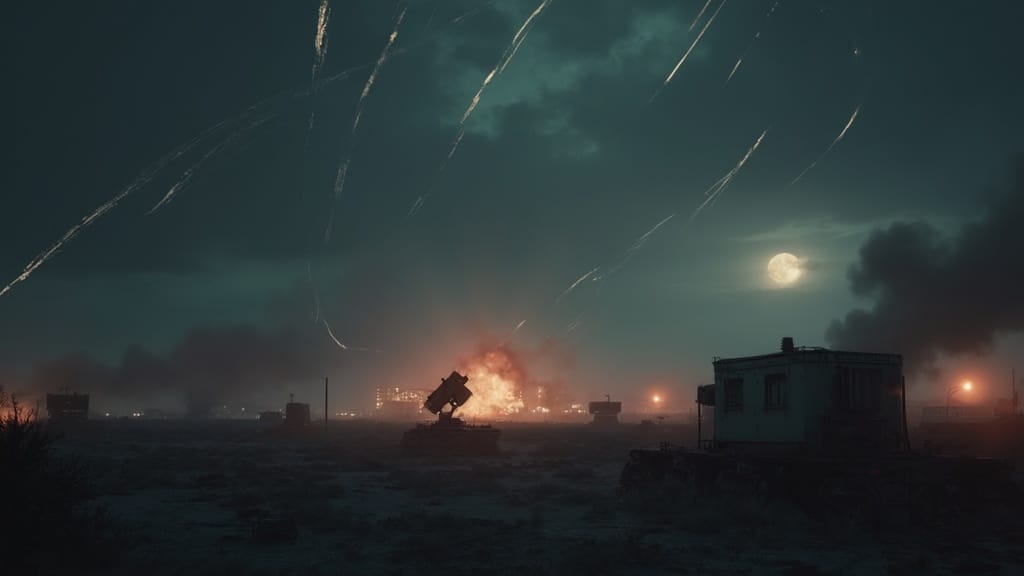
Russia sent roughly 9,000 missiles and attack drones toward Ukraine in July. Ukraine intercepted about 5,300.
Ukraine’s Defense Ministry provided those figures, according to the Associated Press. The result was an interception rate just under 60% on the month—and a reminder that thousands of threats still reached their targets or forced civilians to shelter.
President Volodymyr Zelenskyy said deliveries of interceptors for the American-made Patriot air-defense system were running below last year’s pace. He also said Washington had agreed in principle to allow Ukrainian production, although licensing had not yet become factory output.
Ukraine’s problem is now industrial as much as military. Russia can use cheap drones to consume defensive ammunition, then send faster missiles toward the gaps. The Iran war adds competition for finite American interceptor stocks.
Success will not look like another production announcement. It will look like predictable monthly deliveries, factories beginning licensed work and Ukraine raising its interception rate without exhausting its most expensive missiles. Anything less leaves Russia setting the tempo.
One Drone Found a Hole Between Two NATO Countries
A drone crossed Romania, exploded near a major gas pipeline in Bulgaria and went undetected by both countries.
Bulgarian authorities believe the drone was connected to the war in Ukraine, the Associated Press reported. Nobody was injured, and the pipeline was damaged.
The unsettling detail is not where the drone landed. It is that neither Romania nor Bulgaria detected it while it was in flight.
If NATO members begin moving low-altitude sensors and counter-drone systems toward civilian energy corridors, this incident will have exposed a correctable blind spot. If the response ends with an investigation, similar aircraft will retain a cheap route across allied territory—one with pipelines, towns and power infrastructure beneath it.
The failure case is easy to recognize: the next drone does not find an empty patch of ground.
New Mexico Ordered Meta to Change the Product, Not Just Pay the Fine
New Mexico did not merely fine Meta. It ordered the company to change its products.
New Mexico Judge Bryan Biedscheid ordered Meta to pay $567 million toward addressing harms to young people and imposed new safeguards on Facebook and Instagram, according to the Associated Press. The order includes warnings, age-assurance requirements, limits affecting teenage use and restrictions involving artificial-intelligence chatbots. Meta plans to appeal.
The money is substantial, but the product controls are the real experiment. Courts usually punish conduct after the fact; this order reaches into how Meta’s services are designed and supervised. If it survives appeal, other attorneys general gain a practical menu of remedies rather than another demand that platforms “do better.”
Implementation could fail in several ways. Meta may win a stay, age checks may prove unreliable, or the rules may push teenagers toward false account information without reducing harm. Compliance reports, usage patterns and the appeal will reveal whether New Mexico created an enforceable safety model or an expensive legal prototype. (A New Mexico court orders Meta to redesign its services for teenagers)
Amazon’s AI Ambitions Now Come With a Power-Plant-Sized Carbon Permit
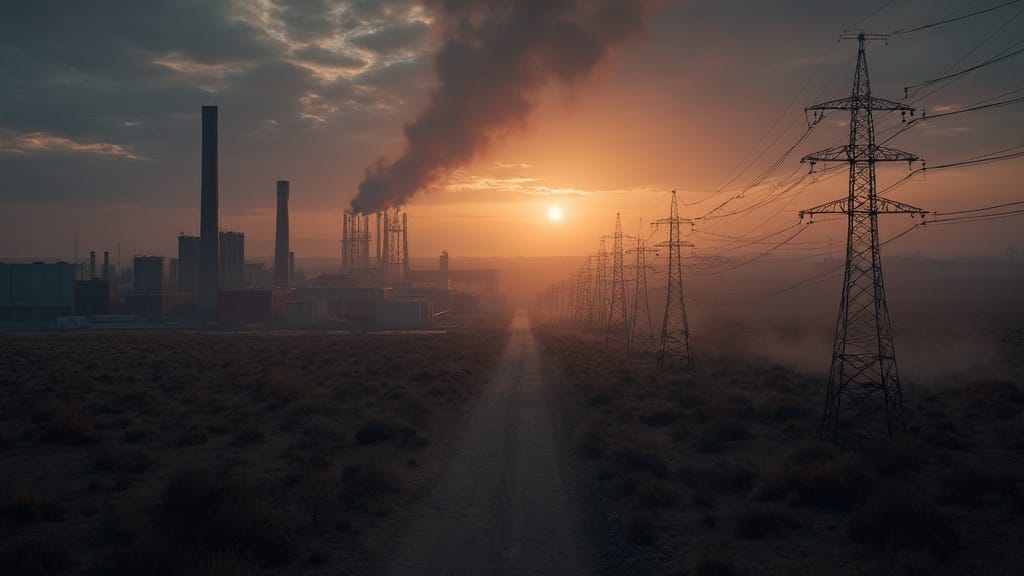
Amazon’s planned data-center campus in Pecos County, Texas, would use dedicated natural-gas generation. TechCrunch reported that the associated complex has been permitted to emit as much as 33 million tons of carbon dioxide annually—more than any existing American power plant.
That figure is a regulatory ceiling, not a forecast of actual emissions. But ceilings reveal the scale developers want available. TechCrunch reported that the proposed GW Ranch Energy Center could eventually provide 7,650 megawatts, turning an AI campus into something closer to a privately operated industrial grid.
Amazon says on-site generation can keep the project from increasing electricity costs for Texas households. If the approach works, hyperscalers gain faster access to enormous quantities of dependable power without waiting for public-grid expansion. The trade-off is clear: emissions, water use and infrastructure planning move into individual permit proceedings.
The number to watch is not permitted capacity but actual operation. A much lower fuel burn would make the permit a worst-case envelope; sustained output near the ceiling would show that the AI boom is being financed partly with a new generation of fossil-fuel plants.
Federal Auditors Checked DOGE’s Receipts. Several Were Not Receipts.
DOGE’s “Wall of Receipts” did not give federal auditors enough evidence to verify its savings claims.
The Government Accountability Office reviewed the Department of Government Efficiency’s online “Wall of Receipts,” which claimed $110 billion in savings from canceled contracts, grants and leases as of July 7. The Government Accountability Office found that 108 of 264 leases listed for termination were already being wound down before DOGE existed, the Associated Press reported.
One claimed $1.7 billion saving came from a Defense Department information-technology contract that had not been terminated. The larger problem was methodological: DOGE did not provide enough documentation for auditors to reproduce important parts of its total.
Real reform requires knowing whether money was actually saved, merely left uncommitted or never going to be spent. If Congress adopts an auditable standard before preserving DOGE-era cuts, the exercise could still produce durable reform. If disputed figures remain the basis for permanent staffing and service reductions, disruption will have outrun accounting.
The cleanest signal is also the dullest: corrected figures, documented calculations and contracts that are genuinely canceled.
A SpaceX Rocket Stage Hit the Moon—and South Korea Found the Crater
A discarded SpaceX Falcon 9 upper stage struck the Moon on August 5 at roughly 5,400 miles per hour. South Korea’s Danuri orbiter captured before-and-after images of the impact site, according to the Associated Press. (South Korea photographs the crater left by a Falcon 9 stage)
The collision was accidental, but its well-predicted timing gave researchers a useful natural experiment. Observations of the flash, debris and crater can improve models of how objects strike the lunar surface.
The more important long-term question is administrative. Space agencies track debris near Earth extensively, but objects traveling through the much larger region between Earth and the Moon are harder to catalogue. That matters more as governments and companies deploy lunar satellites, landers and eventually surface equipment.
Success would mean routine publication of cislunar trajectories and shared warning procedures. Failure will look quiet until it does not: another untracked object, this time with something expensive nearby.
Publishing Is Arguing About AI Copyright Without Testing the AI
Publishing is debating AI copyright while largely bypassing the people who test AI systems.
A rapid evidence review posted to arXiv on August 2 examined 89 articles about artificial intelligence in book publishing. Author Fred Zimmerman found that 10 offered sustained technical scrutiny and none centered a direct interview with a frontier-laboratory researcher or model-evaluation engineer. (A review finds publishing’s AI debate is missing technical scrutiny)
The paper is a single-author preprint, has not been peer reviewed and uses a purposive rather than representative sample. Its percentages should therefore be treated as one researcher’s measurement, not a settled description of an entire industry.
The diagnosis is still useful. Publishers can resolve licensing questions while remaining unprepared to evaluate retrieval errors, prompt injection, changing model behavior or the cost of running AI systems at scale. Copyright determines whether training is lawful; technical testing determines whether the product works.
Adoption will be visible when publishers begin publishing model evaluations, failure rates and procurement standards. If the conversation remains dominated by licensing announcements, the industry may end up buying properly authorized systems it does not know how to audit.
The Lens
Real outlet monitoring. Today's coverage gaps — what each side is watching.
What right-leaning outlets are watching
The Trump administration has sharply reduced the number of student visas issued to applicants from China and India, according to the Washington Examiner. The move affects two of the largest sources of foreign students in the United States and could alter enrollment patterns at U.S. colleges and universities.
Also in right-leaning news:
- Fox News reported on an Iranian military move, with a former military planner arguing that tank deployments signal a potentially important shift in posture.
- The New York Post reported that the father of missing Florida teen Sophia Cover believes she may have been coerced to leave home.
What progressive outlets are watching
Ukraine’s recent battlefield recovery has been short-lived, The Atlantic reports. The article focuses on how quickly gains can erode and how difficult it remains for Ukraine to translate temporary momentum into durable military advantage.
Also in progressive news:
- The Guardian reported that Greenland has issued a strong warning as a Trump-linked oil firm prepares to drill.
- Vox published an explainer on why flu shots have been so hard to improve.
⚡ What Most People Missed
- Google’s unusual answer to AI brain drain: Axios reported that Demis Hassabis moved from Google DeepMind chief executive to chairman and Alphabet chief scientist, while Jeff Dean and several prominent Google researchers formed Discovery Loop. Alphabet’s planned investment suggests a new retention strategy: let prized researchers leave the org chart without leaving Google’s financial and computing orbit.
- Britain’s AI-copyright retreat happened months ago: The British government’s March 18 policy shift followed opposition from artists and publishers and therefore is not a new development from this week. Its relevance now is broader: governments are becoming less willing to give AI developers wide latitude first and settle compensation later.
- The boundary between chemistry and life may be blurrier than textbooks imply: Research on early metabolism proposes that the ancestor shared by bacteria and archaea may not have possessed every metabolic system later found in both groups. That is not evidence that life arose twice, but it could complicate the familiar idea of one fully equipped common ancestor.
📅 What to Watch
- If commercial traffic through Hormuz rises before Iran and the United States settle the wider conflict, it means insurers and shipowners believe a narrow operational truce can survive without political peace.
- If Wednesday’s consumer-price report is hot after July’s job losses, it means the Federal Reserve’s next decision will distribute economic pain rather than avoid it.
- If Meta secures a stay of New Mexico’s order, it means the first decisive fight will be over whether courts can redesign platforms at all—not whether the proposed safeguards work.
- If Amazon publishes expected emissions far below its Texas permit ceiling, it means the 33-million-ton allowance is contingency planning; if not, dedicated fossil generation may become the default shortcut around grid constraints.
- If Romania and Bulgaria permanently deploy low-altitude sensors near the Trans-Balkan gas pipeline, civilian energy corridors will have become part of NATO’s air-defense perimeter.
- If Ukraine begins licensed production of Patriot interceptors, manufacturing rights will have moved from diplomatic promise to a durable change in the war’s supply chain.
The Closer
A tanker waits for a permission slip. A data center grows its own gas plant. And a dead rocket leaves South Korea a fresh crater to photograph. (South Korea photographs the crater left by a Falcon 9 stage)
Meanwhile, the most advanced economy on Earth has discovered that “receipt” is apparently an aspirational accounting category.
Keep watching the bottlenecks.
Forward this to the friend who still thinks the cloud lives in the sky.