The Lyceum: Power & Infrastructure Weekly — Aug 08, 2026
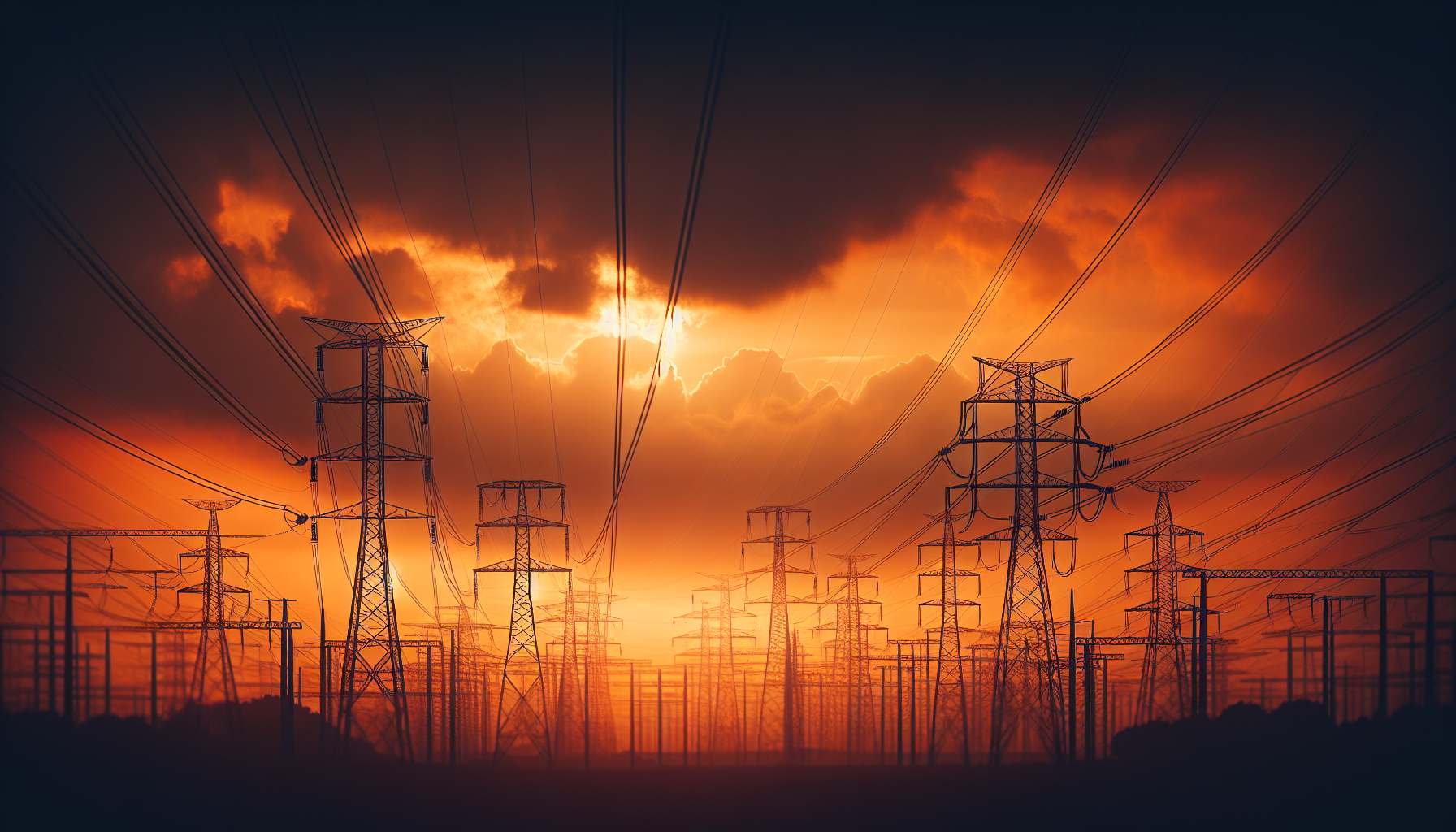
Photo: lyceumnews.com
Week of August 8, 2026
The Big Picture
Infrastructure planners spent this week demanding receipts. Texas wants proof that data-center projects are real, Chicago wants hard power-and-water numbers, and grid operators are confronting a problem new generation alone cannot solve: electricity still has to reach the load.
What Just Shipped
- Three Gorges’ 100 MW Fresnel CSP plant (China Three Gorges): Entered trial operation at Hami during the August 1–8 window. The plant uses linear Fresnel mirrors and thermal storage to produce dispatchable solar electricity.
- CGN’s 100 MW Jixi Tower CSP plant (China General Nuclear): Began delivering power in Baicheng during the August 1–8 window. The project is designed to feed an ultra-high-voltage direct-current transmission system from a region with punishing winter conditions.
- Powder2Power (Powder2Power consortium): Began commissioning its megawatt-scale system at the Themis solar tower in France during the August 1–8 window. Instead of molten salt, the system circulates solid particles that absorb and store heat at high temperatures.
This Week's Stories
Texas Turned Data-Center Deposits Into Stranded Capital
Texas has put data-center developers’ deposits on the line. Governor Greg Abbott directed the Public Utility Commission of Texas and the Electric Reliability Council of Texas to audit data centers awaiting grid connections and pause new approvals. The Texas Tribune and Axios put the queue at roughly 1,800 proposals requesting 474 gigawatts—more than five times ERCOT’s record peak demand.
The immediate consequence is financial. Reuters reported Friday that developers had tied up hundreds of millions of dollars in grid security, generally around $50,000 per megawatt, to enter ERCOT’s “Batch Zero” study process. Reuters also reported that an early draft rule could raise the non-refundable share of some deposits from 20% to 80%.
A queue position now looks more like a project-finance commitment than a free option. Developers with land, financing and credible power plans may benefit as speculative applications withdraw. Marginal projects may turn to on-site generation or leave Texas.
Failure would mean a prolonged freeze that traps credible and speculative projects alike. The tell will be whether ERCOT publishes classifications, refunds security promptly and gives applicants a timetable—or simply replaces a swollen queue with a frozen one.
The Midwest Has Electricity. Moving It Is the Expensive Part.
The Midwest’s power problem is increasingly a delivery problem. Axios reported Thursday that the Southwest Power Pool has approved $8.6 billion of transmission projects as heat, aging equipment and large new loads strain the regional grid. The spending includes high-voltage lines and upgrades needed to move power from where it is cheapest to generate to where customers actually need it.
Reuters recently reported that U.S. grid congestion costs reached $777.8 million in June, citing calculations by grid-software company Gridraven. Congestion is the penalty paid when transmission constraints force a grid operator to dispatch more expensive local generation instead of cheaper power elsewhere.
MarketScale described the same pressure as a real-time redesign of utility capital plans. EnergyNow also reported that higher electricity demand helped Duke Energy offset rising expenses in its latest quarter. Demand growth is good for sales. It is less charming when substations, transformers and transmission corridors take years to build. (boereport.com)
If the buildout succeeds, flexible generation, storage and large customers located near spare network capacity become more valuable. Failure brings rising congestion charges, curtailment and utilities quietly rationing economic development through interconnection delays. Watch approval times for Southwest Power Pool projects—not the size of the announced plan. (The Midwest’s Electricity Problem Is Increasingly About Delivery, Not Generation)
Chicago Wants Data Centers to Replace “Efficient” With Numbers
Chicago wants data centers to show their work. Block Club Chicago reported Thursday that a city environmental-justice working group recommended requiring data centers to disclose their electricity and water consumption. The group cited planning estimates ranging from roughly 300,000 gallons per day for a conventional facility to several million gallons for some hyperscale configurations. (Chicago Wants Data Centers to Show Their Power and Water Receipts)
Those figures are not universal operating benchmarks. Dry coolers, evaporative towers, liquid cooling and hybrid systems produce dramatically different power-and-water profiles. That is precisely why facility-level disclosure matters: a city cannot size mains, substations or wastewater systems around a corporate sustainability adjective. (Chicago Wants Data Centers to Show Their Power and Water Receipts)
Related Digital is considering a hyperscale facility within the proposed Quantum Shore Chicago development. If Chicago connects disclosure to permits or utility-service agreements, operators will have to reveal how cooling choices shift demand between the electric and water systems. Closed-loop designs and reclaimed water could gain a permitting advantage. (Chicago Wants Data Centers to Show Their Power and Water Receipts)
Non-adoption would leave the recommendation as another report with no engineering consequences. The signal is simple: whether Chicago requires measured annual consumption, peak-day demand and cooling-system specifications for individual sites rather than voluntary portfolio-wide averages. (Chicago Wants Data Centers to Show Their Power and Water Receipts)
India’s Solar Fleet Is Running Into the Wires
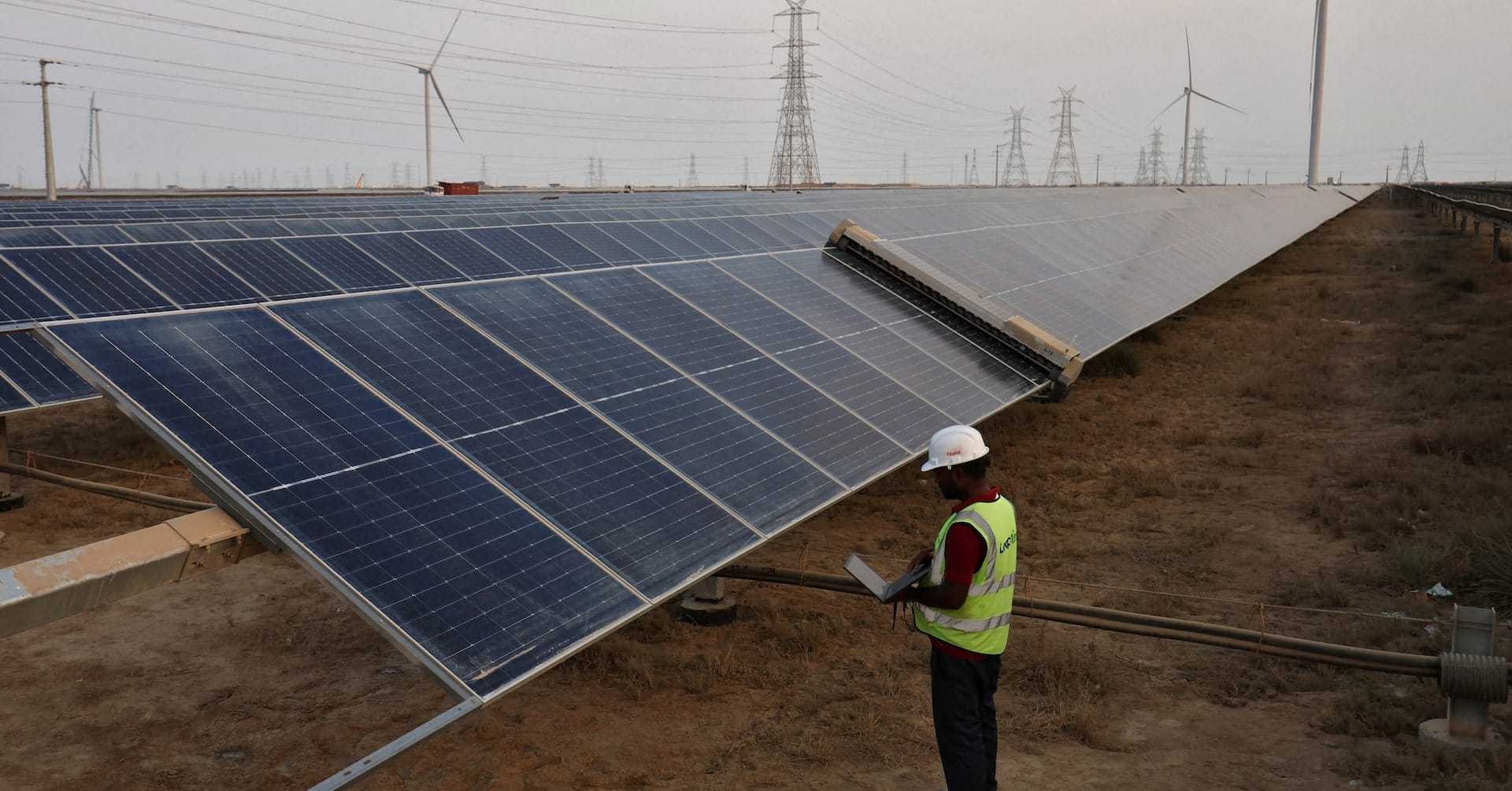
India is building solar capacity faster than its grid can absorb it. Reuters reported that infrastructure constraints prevented nearly 7% of India’s solar capacity from operating at full output during peak generation hours. That is an unusually clean measurement of the gap between installing generation and building a system capable of using it.
The beneficiaries of closing that gap extend beyond solar developers. Interstate transmission, grid-scale batteries, demand response and flexible industrial loads all gain value when midday production begins exceeding the network’s ability to move it. Storage can shift output into the evening. Transmission can move it to regions where demand is still rising.
If those investments lag, India can keep setting renewable-capacity records while wasting more available generation. Developers then face lower realized revenue, and grid operators retain thermal plants for the hours solar cannot reach.
Watch transmission awards, battery procurements and solar curtailment data. Falling curtailment alongside rising installations would show the supporting system is catching up; rising curtailment would mean the modules are winning a race the grid is losing.
The Data-Center Metric Everyone Quotes Is Hiding the Trade-Offs
The most familiar data-center efficiency metric leaves important costs off the ledger. A preprint posted August 5 proposes a broader way to measure data-center resource efficiency. The paper has not been peer-reviewed, so its conclusions are a research proposal—not an accepted operating standard.
The authors argue that power usage effectiveness, or PUE, misses exchanges among cooling electricity, on-site water, power-plant water consumption, equipment reuse and waste-heat recovery. A facility can reduce its direct water use with dry cooling while increasing electricity demand; if that power comes from a water-intensive thermal plant, part of the burden has merely moved upstream.
The paper also challenges automatic credit for waste heat. Server heat has value only when a nearby customer, pipe network and compatible temperature requirement exist. Without them, “recoverable” heat is still warm air looking for somewhere to go.
Success would mean operators and regulators report a connected set of electricity, water, source-energy and heat-reuse measurements. Failure would look like another elegant framework that never enters procurement or permitting. Watch whether major operators adopt the proposed accounting—or continue publishing whichever single metric looks best.
China’s New Solar Plant Stores Sunlight as Heat, Not Electrons
China’s newest solar plant is banking heat for after sunset. SolarPACES reported that China Three Gorges’ 100-megawatt linear Fresnel concentrated-solar plant at Hami entered trial operation. Fresnel systems use rows of comparatively simple mirrors to focus sunlight onto a receiver; stored heat can then produce electricity after direct sunlight fades.
If commissioning succeeds, the project strengthens the case for concentrated solar power as a complement to photovoltaic panels and batteries. China gains another route to dispatchable renewable generation using thermal storage, while equipment suppliers gain a full-scale proving ground for a Fresnel design rarely deployed at this size.
The risk is not whether mirrors can make steam. It is whether the plant can sustain output, storage performance and maintenance economics through dust, temperature swings and repeated thermal cycling.
Watch the operating data that follow trial operation: annual capacity factor, storage duration, forced outages and maintenance costs. A ribbon-cutting proves construction; a year of dispatch proves infrastructure.
A North Carolina Water Award Moves From Policy Into Procurement
A $5.2 million water award in North Carolina now has to become pipes, pumps and projects. GovTribe’s federal award record shows that the U.S. Environmental Protection Agency obligated $5.2 million to Fuquay-Varina, North Carolina, for drinking-water construction on August 1. It is modest beside a multibillion-dollar transmission plan, but municipal infrastructure is built through thousands of awards like this one.
The funding can now translate into engineering work, treatment equipment, pumps, pipe and construction contracts. That makes the award relevant to regional engineering firms and water-technology vendors rather than merely to grant writers.
Success means the money becomes a defined project with procurement packages, construction milestones and measurable capacity or water-quality improvements. Failure looks like delayed design, cost escalation or an award that remains financially obligated but physically invisible.
The next signal is the deliverable: Fuquay-Varina’s bid documents and construction schedule will show exactly which part of the drinking-water system the federal funding is buying.
New Products & Launches
Plato5X: Energy Concepts announced a five-megawatt modular infrastructure platform combining natural-gas cogeneration, absorption cooling, water recovery and on-site carbon capture. Energy Concepts says the system can operate without grid power or municipal water, but its output, water-recovery and carbon-capture figures are vendor claims without independent field validation.
PAINT database: Researchers published a database for operational concentrating-solar power plants using FAIR principles—data designed to be findable, accessible, interoperable and reusable. Better operating data could make it easier to compare plant designs, diagnose underperformance and finance projects with evidence rather than brochure specifications.
⚡ What Most People Missed
- Queue reform survived the courtroom: The D.C. Circuit upheld the Federal Energy Regulatory Commission’s Order No. 2023 on July 31, preserving clustered studies, higher deposits and withdrawal penalties for generator interconnection. The next battle is regional implementation: “first ready, first served” works only if grid operators can define readiness without creating a new flavor of bureaucratic purgatory.
- The Potomac PFAS deadline remains active: The Washington Suburban Sanitary Commission is seeking responses by August 20 for a PFAS pilot at its Potomac Water Filtration Plant. Removal percentage will get the headline, but media life, residual disposal and cost per thousand gallons will determine whether the pilot can become a full treatment train.
- Copenhagen found a customer for server heat: Data Center Dynamics reported that atNorth agreed to supply waste heat from its DEN01 facility to Vestforbrænding’s district-heating network. It remains a partnership rather than a demonstrated operating milestone, but the geography is right: dense heat demand and an existing pipe network are what turn warm servers into useful infrastructure.
- EPA is widening the contaminant watchlist: The U.S. Environmental Protection Agency has proposed its sixth Unregulated Contaminant Monitoring Rule, covering sampling for 30 chemicals between 2028 and 2030. Monitoring rules do not impose treatment limits, but they generate the occurrence data that can later turn obscure compounds into capital plans.
📅 What to Watch
- If ERCOT refunds security quickly to rejected or downsized data-center projects, it means Texas wants a cleaner queue rather than a punitive exit tax.
- If Chicago ties power-and-water disclosure to permits, cooling architecture will become a siting variable rather than a post-construction sustainability choice.
- If India’s solar curtailment rises despite new transmission awards, it means project completion dates—not announced spending—are becoming the binding renewable constraint.
- If Hami publishes sustained nighttime output and storage performance, concentrated solar power will have a stronger claim on the dispatchable-renewables market now dominated by batteries.
- If Fuquay-Varina’s award produces equipment tenders within months, smaller federal water grants may offer a faster commercial pipeline than headline-scale financing programs.
- If data-center operators adopt multi-resource reporting from the August 5 preprint, vendors will have to optimize entire cooling-and-power systems instead of gaming one efficiency ratio.
The Closer
Texas has a velvet rope around 1,800 server farms. Chicago is asking cooling towers to empty their pockets, and a Chinese desert is putting sunlight in a thermos.
Somewhere near the Potomac, PFAS vendors are preparing to explain why their residual-disposal spreadsheet is much sexier than everyone else’s.
Keep the pumps primed.
Forward this to the colleague who still thinks a megawatt arrives without pipes, permits or plumbing.