The Lyceum: Defense Tech Daily — Jul 24, 2026
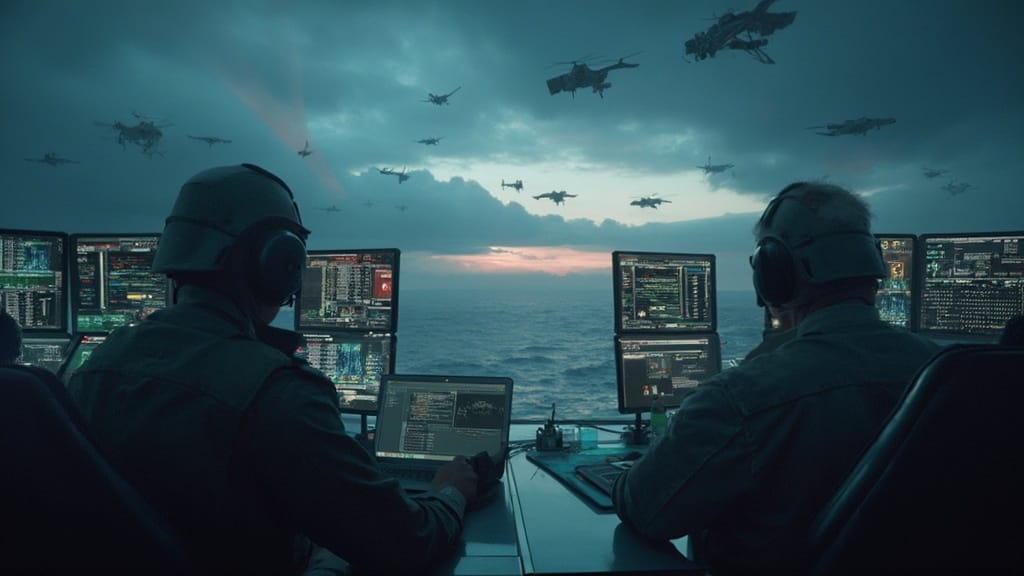
Photo: lyceumnews.com
Past 48 Hours — July 24, 2026
The Big Picture
The defense world is converging on an uncomfortable formula: cheap weapons create expensive problems, while the sensors and command systems needed to manage them remain decidedly uncheap. Over the past 48 hours, attacks threatened two shipping chokepoints, Germany funded a naval laser, Canada opened a faster route for buying drones, and the U.S. Navy ordered three more flying radar rooms.
What Just Shipped
- Defence Drone Initiative (Canada’s Department of National Defence): Launched July 23 as a fast-track marketplace for drones, robotic vehicles, counter-drone interceptors and related weapons; initial supplier applications remain open until August 14.
- E-2D Advanced Hawkeye Block II (Northrop Grumman): The U.S. Navy awarded a contract July 22 worth up to $1.196 billion for three aircraft and support, with delivery scheduled by December 2031.
- German Navy High-Energy Laser Weapon System (Rheinmetall and MBDA): Germany’s Federal Office of Bundeswehr Equipment, Information Technology and In-Service Support signed a mid-three-digit-million-euro development contract, Reuters reported Thursday.
This Week's Stories
One War Is Now Squeezing Two of the World’s Most Important Waterways
The Middle East conflict is no longer threatening one shipping chokepoint. It is threatening two.
The Associated Press reported that U.S. Central Command struck targets across Iran overnight, including sites on Qeshm Island associated with Iranian naval forces and explosive drone boats. At the Strait of Hormuz, which carried roughly one-fifth of global oil and gas during peacetime, attacks and fear have already pushed commercial traffic sharply lower. (Iranian Missile Toward Turkey Shot Down, Air Defenses Get Their Real‑World Exam)
At the opposite end of the Arabian Peninsula, Yemen’s Houthis said they attacked two Saudi tankers near Bab el-Mandeb on Thursday. According to the Associated Press, Saudi state media and United Kingdom Maritime Trade Operations confirmed a fire aboard one tanker. Bab el-Mandeb normally carries about 12% of world trade—and much of the oil Saudi Arabia rerouted to escape Hormuz.
That creates a nasty strategic puzzle. Cheap drones and missiles do not need to sink a fleet; they only need to persuade captains and insurers that sailing is a bad bet. CBS News reported that President Donald Trump vowed to end the war soon even as the toll on U.S. forces emerged and Iran threatened additional economic targets. (cnbc.com)
If U.S. strikes suppress Iran’s maritime weapons and naval escorts deter further Houthi attacks, traffic should begin recovering. If another Saudi tanker burns—or transit numbers keep falling—the conflict will have forced navies to defend two distant corridors at once, leaving fewer ships and interceptors for everything else.
Germany Is Putting Real Money Behind a Naval Laser
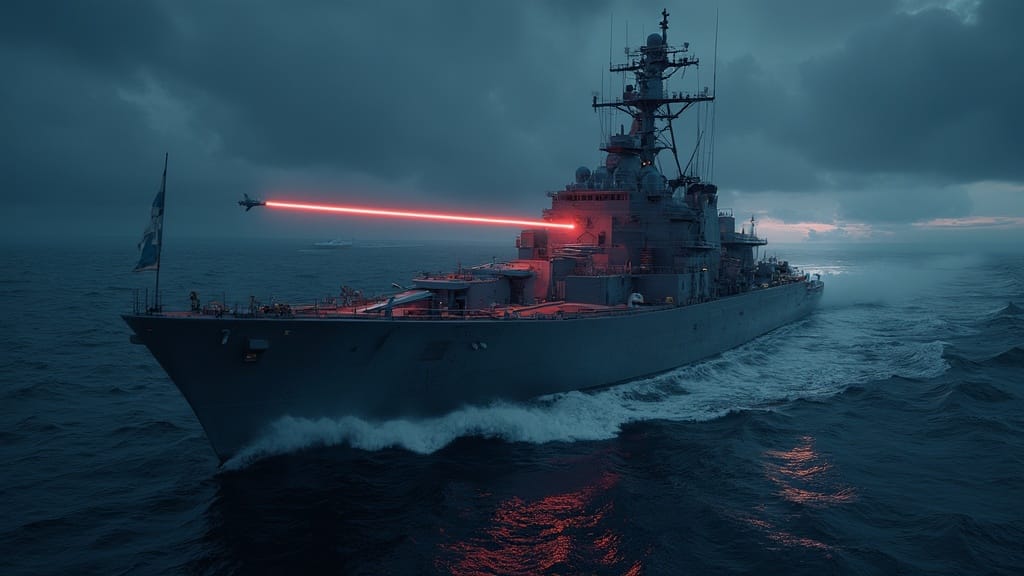
Germany has moved its naval laser program beyond the demonstration stage.
Reuters reported Thursday that Germany’s military procurement agency awarded Rheinmetall and MBDA a contract worth a mid-three-digit-million-euro amount to develop a high-energy laser for German Navy ships. The companies previously tested a demonstrator at sea; this contract funds work toward an operational weapon system.
The appeal is brutally economic. A warship carrying a finite number of expensive missiles can be exhausted by enough cheap drones. A laser uses electrical power instead of consuming a conventional interceptor with every shot, potentially giving ships a deeper magazine against short-range threats.
But lasers come with their own fine print: rain, haze and sea spray weaken beams; ships must generate and cool substantial power; and the weapon must hold its beam on one spot long enough to cause damage. It will supplement missiles and guns, not replace them.
The program wins if Germany identifies a ship class, power level and credible fielding schedule. If those details remain absent—or the system stays aboard test vessels—it will be an expensive science project with excellent promotional photography.
Canada Opens a Fast Lane for Buying Drones
Canada’s Department of National Defence launched the Defence Drone Initiative on July 23, creating a supplier marketplace for surveillance drones, robotic ground vehicles, uncrewed boats and submarines, counter-drone interceptors, standardized drone munitions and deep-strike systems. (Canada Opens a Fast-Track Marketplace for Drones, Interceptors and Robotic Vehic)
Applications remain open until August 14, and Canada says suppliers could qualify as early as September. Qualification is not a purchase order: it gives companies a route into testing, prototypes, limited buys and possible production contracts. (Canada Opens a Fast-Track Marketplace for Drones, Interceptors and Robotic Vehic)
That distinction matters. The initiative is an attempt to replace the usual one-platform, one-winner procurement marathon with a channel that can accept frequent hardware and software upgrades. Combining Canadian Armed Forces and Canadian Coast Guard requirements could be especially useful in the Arctic, where distances make crewed patrols costly and slow. (Canada Opens a Fast-Track Marketplace for Drones, Interceptors and Robotic Vehic)
The upside is a military that can buy technology before it becomes obsolete. Failure looks like a long list of qualified vendors followed by tiny demonstrations and no meaningful orders. The signal to watch is not how many companies enter the marketplace, but how quickly Canada turns qualification into funded deployments. (Canada Opens a Fast-Track Marketplace for Drones, Interceptors and Robotic Vehic)
The Navy Is Spending $1.2 Billion on Three Flying Radar Rooms
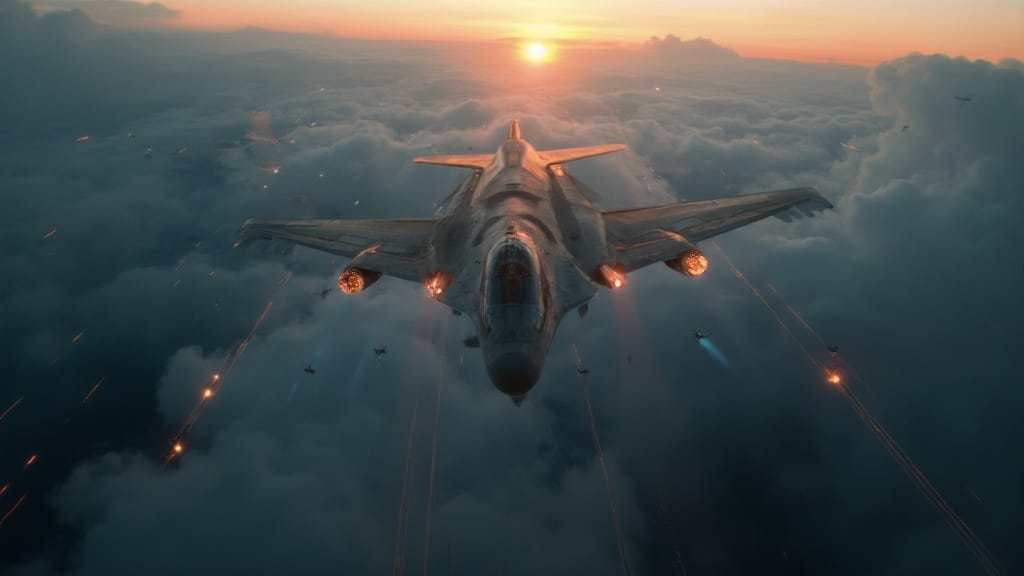
The U.S. Navy awarded Northrop Grumman a contract worth up to $1.196 billion for three E-2D Advanced Hawkeye Block II aircraft and associated support on July 22. The Navy obligated $583.4 million immediately, and delivery is expected by December 2031. (The Navy Quietly Orders Three More E-2D Radar Aircraft for $1.2 Billion)
The E-2D is an airborne radar and battle-management aircraft: it detects planes and missiles at long range, then helps ships and fighters decide what to track and engage. As militaries add swarms, autonomous aircraft and cheaper interceptors, that coordinating role becomes more important—not less. (The Navy Quietly Orders Three More E-2D Radar Aircraft for $1.2 Billion)
This is the emerging force structure in miniature. Armies and navies want large numbers of affordable machines, but those machines still depend on a smaller layer of extremely capable sensors and command platforms. Cheap shooters are only useful if something expensive can tell them where to look. (The Navy Quietly Orders Three More E-2D Radar Aircraft for $1.2 Billion)
Success means the Block II aircraft arrive on schedule and can manage a battlespace crowded with drones, missiles and crewed aircraft. Slippage toward the 2030s—or rising costs around integration—would expose the awkward truth that the Pentagon can build expendable drones faster than it can build the systems required to orchestrate them. (The Navy Quietly Orders Three More E-2D Radar Aircraft for $1.2 Billion)
Greece Is Building a $3.4 Billion Air-Defense Onion
Greek Defense Minister Nikos Dendias announced Thursday that Athens approved more than €3 billion, or roughly $3.4 billion, for Achilles’ Shield, according to Breaking Defense.
The program is designed as layered air defense: different sensors and weapons handle different threats, from small drones to ballistic missiles, while a shared command system decides which interceptor gets each target. Greece expects the system to be completed within 35 months and intends roughly €700 million of the spending to reach Greek industry.
Athens also approved ten additional Shield AI V-Bat surveillance drones, adding to four already in service, plus an Israeli Heron drone, Breaking Defense reported.
The missiles will attract the attention, but the connecting network is the real weapon. If Greece can make radar, drones and interceptors from different suppliers exchange targeting data quickly, Achilles’ Shield becomes a model for smaller NATO countries. If procurement fragments into disconnected batteries, Greece will have bought several useful defenses without building one coherent shield. The first meaningful signal will be the selection of a common command-and-control system.
⚡ What Most People Missed
- The Pentagon wants Reaper missions without Reaper-sized losses: The Defense Innovation Unit is seeking lower-cost, “attritable” aircraft for surveillance and strike missions traditionally performed by the MQ-9. Breaking Defense reported that nearly 30 Reapers had been lost during operations against Iran; the test is whether “affordable to lose” can also mean capable enough to matter.
- Hormuz is open mostly in the legal sense: Anadolu Agency reported that only three vessels crossed during the latest 24-hour period it measured. A formal closure is not necessary if owners, crews and insurers independently decide that transit is irrational.
- Germany wants its own Tomahawks: Chancellor Friedrich Merz said Germany will purchase U.S. Tomahawk cruise missiles and base them on German soil, Reuters reported. The missile is only the visible piece; Berlin will also need targeting data, mission-planning systems and a political process for authorizing deep strikes.
- Ukraine wants the Pentagon to test Ukrainian drones: Ukraine’s presidential office said Volodymyr Zelenskyy discussed sending Ukrainian-made drones to the United States for testing. That is not a U.S. production award, but it signals a reversal in the usual technology flow: Washington may study weapons refined by Ukrainian battlefield iteration.
- The three damaged cargo ships: Several dramatic headlines recirculating alongside the latest Iran coverage are not new. The three-ship incident, the missile interception near Turkey, European deployments to Cyprus after the Akrotiri drone attack, and Trump’s proposed China-trip delay occurred in March; they matter as background, not as July 22–24 developments.
📅 What to Watch
- If another Saudi tanker is hit near Bab el-Mandeb, it means Iran-aligned forces can impose economic pressure across two shipping corridors without physically sealing either one.
- If Germany identifies a ship class and power level for its naval laser, it means directed energy is entering fleet planning rather than remaining a test-range technology.
- If Canada issues production orders soon after September qualification, it means the Defence Drone Initiative is a procurement reform rather than a faster application portal.
- If Greece selects one command system before choosing every interceptor, it means Athens understands that connecting weapons matters more than collecting them.
- If the Defense Innovation Unit demands a full-scale attritable aircraft within a short timetable, it means Reaper replacement is being driven by combat losses rather than ordinary experimentation.
The Closer
A German frigate points a laser at the sky, Canada opens a drone bazaar, and the U.S. Navy orders three flying radar offices with delivery sometime around the next geological epoch.
The future of war is arriving at two speeds: laser-fast and December 2031.
Keep your head on a swivel.
Forward this to the friend who still thinks “open shipping lane” means ships are using it. (canada.ca)
⚡ EDGE Signals
The following signals appeared in the adversarial edge sweep but were not carried forward in the primary synthesis:
- ### The Navy Quietly Orders Three More E-2D Radar Aircraft for $1.2 Billion
- The Navy awarded Northrop Grumman a contract worth up to $1.196 billion on July 22 for three E‑2D Advanced Hawkeye Block II aircraft and associated support. It obligated $583.4 million immediately, with delivery expected by December 2031; the sole-source award works out to nearly $399 million per ai